Marketing · · 5 min read
The cheap website is the expensive one
A low quote looks like savings until you count three years of rebuilds, plugins, fixes, lost leads and team hours.
 By Nicolas (NickMark)

Two quotes land on your desk. One is a fraction of the other. Both promise a modern, responsive website. Both show nice portfolios. Choosing the cheaper one feels like discipline. It is often the most expensive decision you will make this year, and you will not see the bill for months.
The problem is simple. A website quote prices the launch. Your business pays for the years after it. The real cost lives in what happens once the site is live: every change, every fix, every lead that leaves because a form failed quietly on a Sunday.
A quote prices day one, not year three
A website is not a brochure you print once. It is closer to a shop you open every day. It must carry your offer, your prices, your campaigns, your hiring and your credibility with a buyer who found you at midnight. A price that only covers opening the doors says nothing about what it costs to keep them open.
So change the question. Do not ask what the site costs. Ask what it costs to own for three years, including the hours of your own team. That is the number that matters, and it is almost never on the quote.
Where does the cheap site send its bill?
Low priced sites save money in specific places. Each saving comes back later as a cost, usually a larger one.
The early rebuild. A site built from a generic template with no structure behind it fits the business as it was on the day it was quoted. When you add a service line, a second language or a new audience, it does not stretch. It breaks. Then you rebuild well before you planned to, which means paying for the same website twice.
The plugin pile. Every missing feature becomes a plugin: forms, sliders, SEO, caching, security, booking. Each plugin is cheap alone. Together they become subscriptions, conflicts and updates that must happen in the right order. When one update breaks the checkout, someone has to be paid to find out why.
The fixes nobody planned. Cheap builds skip testing on real devices, skip accessibility and skip performance work. None of that shows in the demo. It shows when a client calls to say the menu does not open on their phone.
The leads you never see. This is the largest cost and the hardest to measure. A slow page, a confusing path, a form that sends to an old inbox. Visitors do not complain. They leave. Lost leads leave no invoice, so they never appear in the budget review.
Your team's hours. If changing a headline requires the original freelancer, your marketing manager spends time chasing, explaining and checking. Those hours are real salary, spent on a website that was supposed to be cheap.
How do you estimate the real cost over three years?
You do not need a financial model to see the shape of it. Write down five lines for each option you are considering.
- Build cost. The quote itself.
- Running cost. Hosting, licenses, plugins and subscriptions for three years.
- Change cost. How many changes you expect each month, times what each one costs in outside fees or internal hours.
- Repair cost. A realistic allowance for things that break, and a clear answer to who fixes them.
- Rebuild risk. The chance this site will not survive three years of growth, and what replacing it would cost.
Then add the line you cannot price exactly: the leads a weaker site loses. You do not need a precise figure to make a sound judgment. You only need to admit the line exists.
Done honestly, this exercise often reverses the ranking. The higher quote, with a clear structure, editable content and fewer moving parts, can cost less to own than the low quote with a stack of patches.
How should you judge the price of a website?
Price only means something next to the load. A site for a neighborhood café and a site that runs lead generation in a regulated industry are not the same product, even if both have five pages. Before you compare quotes, decide what your site must carry.
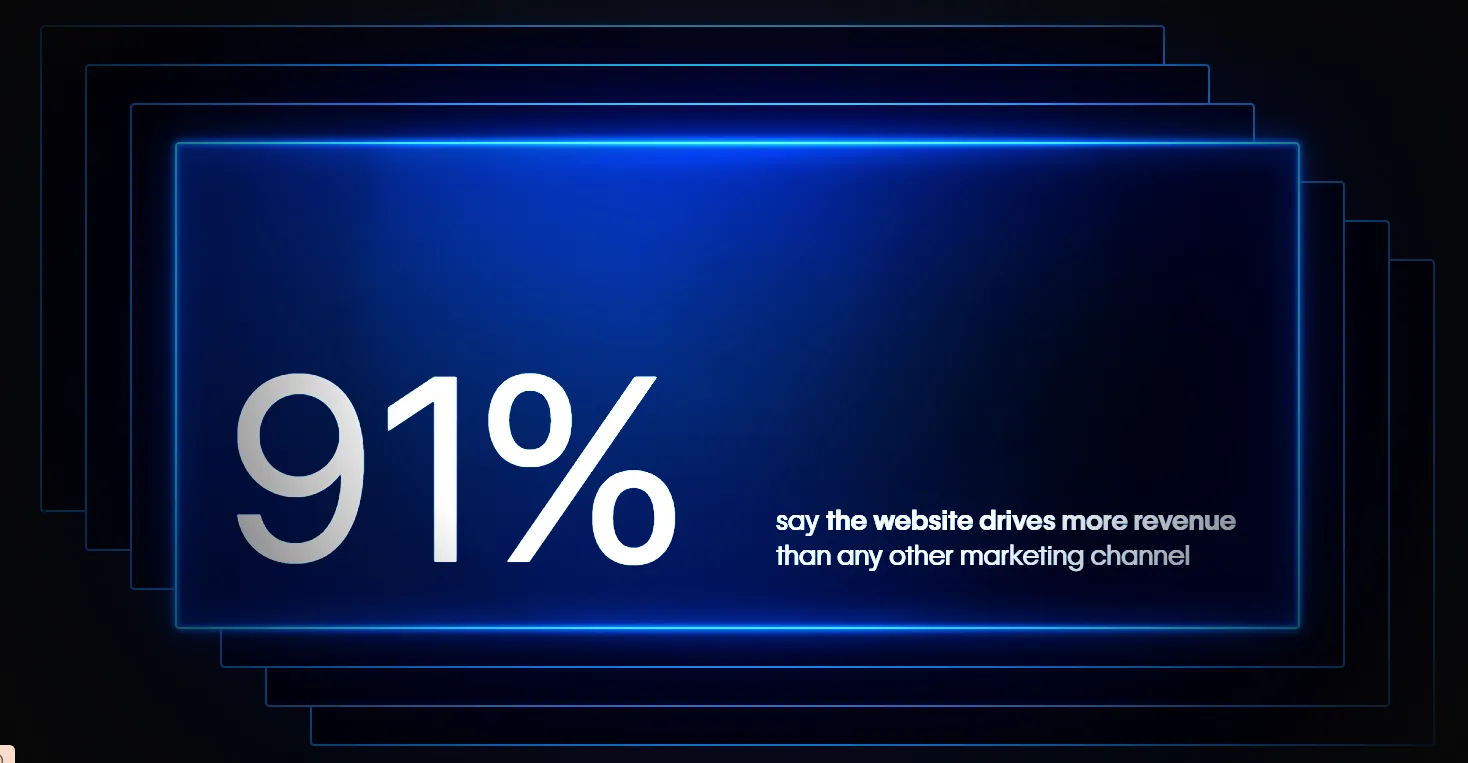
- Revenue weight. How much of your pipeline starts on the website? If most of it does, the site is infrastructure, not decoration.
- Rate of change. How often do prices, offers, campaigns or content change? A site that changes weekly needs editing your team can do safely.
- Trust burden. Do buyers need proof before they call: credentials, cases, compliance, clear pricing? Trust takes design and content work, and cheap builds cut it first.
- Growth path. Will you add languages, markets, services or a blog in the next three years? Structure for that now costs less than retrofitting it later.
- Integrations. Does the site need to talk to your CRM, booking system or analytics? Each connection is a place a cheap build can fail.
- Ownership. After launch, who can change what, and do you own the files, the domain and the accounts?
If your answers are light across the board, a simple, inexpensive site may be exactly right. Cheap is not always wrong. It is wrong when the load is heavy and the price pretends it is not.
What the expensive quote should prove
The opposite trap exists too. A high price is not proof of quality. Some providers charge more for the same template with a longer presentation. A higher quote earns its price only if it shows you where the money goes after launch.
Ask every provider the same questions. How will my team update prices and pages without you? What in the structure lets the site grow? What breaks most often on sites like this, and how do you prevent it? How will we know if the site brings leads? A provider who answers clearly is selling you lower ownership costs. One who answers with adjectives is selling you a launch.
What has good value looked like in our work?
The sites that paid back best for the brands we work with were never the cheapest to build. They were the ones built around what the business had to carry. Gimnasio Los Caobos, a school in Colombia, reported admissions up 613% with its new brand, digital ecosystem and site. Experian BePartners, a credit risk SaaS built inside Experian DataCrédito, reported 55k daily visits and 11k leads a day. Neither result came from a website alone. Both came from a site built for its load, inside a brand that knew what it wanted to say.
Back to the two quotes
Look again at the two numbers on your desk. One prices a launch. The other, if it is honest, prices three years of a working asset. Compare them on that basis and the cheaper option often stops looking cheap. Pay for what the site must carry, and you stop paying for the same website twice.
If you want help weighing your options, here are the ways in.