Design · · 5 min read
Fifteen years of brand websites taught me what lasts
Every few years the tool I built with changed. Judgment and structure never did, and that is why we now build in code with the Brains.
 By Nicolas (NickMark)
I have changed the way I build websites more times than I can count. Every few years a new tool arrives, and with it the same quiet fear: everything I know is about to expire. After 15 years and more than 200 brands, I can tell you that fear is half right. The tool does expire. The rest does not.
The tool was never the craft
I started the way many designers did. Hand coded pages, then WordPress themes, then a long stretch inside visual site builders. Each change felt enormous at the time. Each one asked me to learn new panels, new shortcuts and new limits.
Looking back, the panels were the least important part. What made a site work for Cemex, for Experian or for a school in Colombia was never which button I pressed. It was the decisions before the first button: what the page must do, who it speaks to, what a visitor should feel when it opens, and what they should do next.
Tools reward speed. Brands reward judgment. When I confused the two, I made fast sites that nobody remembered.
What the visual builder years gave me
I spent many years building visually, and I do not regret a day of it. That period taught me three habits I still use every week.
First, structure before decoration. A visual builder makes you think in boxes, classes and reusable parts. You learn quickly that a site with no system turns into a mess by the tenth page. Naming things well, keeping spacing consistent, defining a type scale once: that discipline came from the canvas, and it travels to any medium.
Second, design in the real medium. Building in the browser instead of a static mockup taught me that a website is not a poster. It moves, it reflows, it loads slowly on a bad connection. Designing there kept me honest.
Third, the community answers faster than the manual. Some of the best things I learned came from strangers posting a fix late at night. Generosity in a craft community is a real asset, and I try to return it whenever I can.
Those years also showed me what visual building does not give you. You rent the platform. Your structure lives inside someone else's rules, pricing and roadmap. When the brand needs something the canvas does not support, you start bending the work around the tool instead of the other way around.
Why we now build in code with the Brains
Today at Braindy we build sites in code. Not because code is fashionable, and not because visual tools are bad. We changed because the cost of writing code collapsed while its advantages stayed.
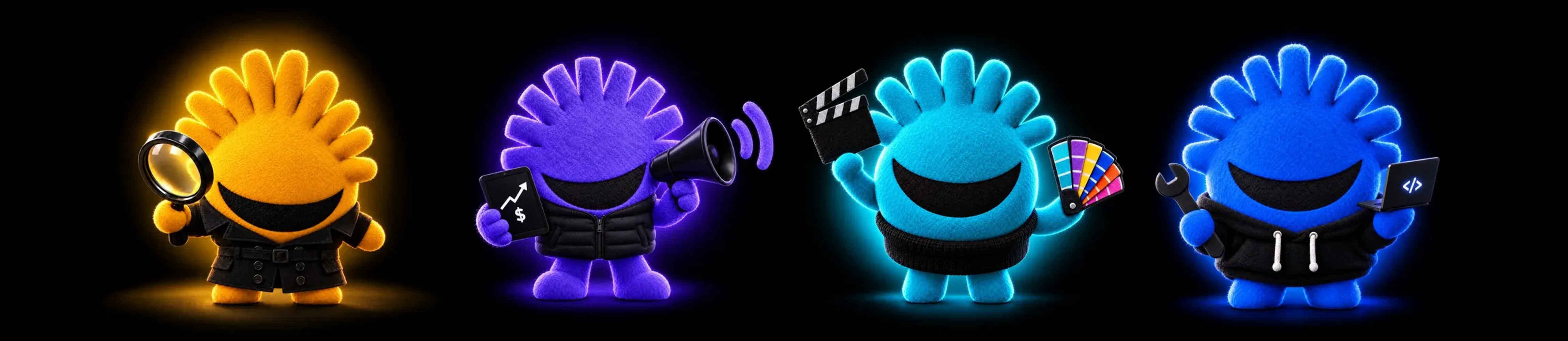
Our four Brain Agents execute the work. The Researcher maps the audience and the competition. The Marketer shapes the message and the search intent. The Creator produces copy and visuals on brand. The Builder writes the site itself: clean, static where it can be, fast by default. I set the strategy, make the calls and review every decision before it ships.
That split matters. AI can write a component in seconds. It cannot decide whether that component belongs on the page. Execution got cheap, judgment did not. So I spend my time where it counts: on the questions no agent should answer alone.
Code also gives the brand something I could never fully give it before, which is ownership. The design system lives in files the client owns. The content can move to another host in an afternoon. Nothing important is locked inside a subscription.
What did not change in 15 years?
When I look at the projects that held up over time, they share a few traits. None of them depends on the tool that built the site.
- A clear job for every page. If I cannot say in one sentence what a page is for, it should not exist.
- A system, not a collection. Colors, type, spacing and components are defined once and reused everywhere.
- Words written before layouts. The message decides the design, never the reverse.
- Feeling as a requirement. What doesn't move people isn't remembered, so emotion belongs in the brief, not as decoration on top.
- A path to change. The site must be easy to update by the people who will actually update it.
Gimnasio Los Caobos is a good example. The school reported admissions up 613% after the new brand, digital ecosystem and site. No single tool explains that. A clear brand story, a site built to answer the questions real parents ask, and a system that kept every touchpoint consistent: that does.
Quimiolab, a brand partner since 2018, reports sales up 1,150% across the years we have worked together. Over that time the tools I used changed more than once. The brand system stayed, and so did the thinking behind it. That continuity is the asset, not the software.
What should designers who fear the next tool do?
Learn the new tool. Then stop worrying about it. Invest in what compounds: taste, structure, writing, and the ability to explain why a decision is right for one specific brand.
The common advice says you must master every new platform to stay relevant. I think that is backwards. Mastering platforms keeps you busy. Understanding brands keeps you useful. The person who knows what to build will always find a way to build it, and today that way is faster than it has ever been.
I also tell them to keep their systems portable. Write your design tokens down. Keep your content in formats you can export. Document why you made the choices you made. Treat every tool as a temporary home, however comfortable it feels.
Will the tool change again?
So yes, the tool will change again, probably soon. I no longer feel that as a threat. Every tool left something behind that I still carry: structure from the canvas, honesty from the browser, speed from the Brains. What carries a brand from one tool to the next is judgment, and judgment does not expire.
If you are deciding what your next site should be built on, start with what it should do, and if you want a second pair of eyes, here are the ways in.